

- This event has passed.
Electric Vehicle Power Electronics and Motor Drive Control Design
05/05 – 08/05
📍 Tallinn University of Technology, Ehitajate tee 5, Tallinn NRG-223
The event will be held in English.
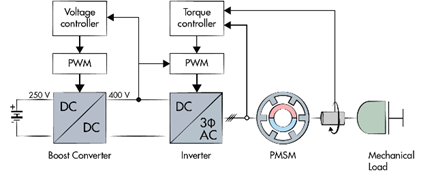
This hands-on, interactive training course focuses on how Simscape Electrical can be used to master modeling, control, test and verification of digitally controlled switched-mode power electronic converters in motor drive systems of electrical vehicles.
Topics include:
- Modeling direct current (DC) power electronic systems
- Parameterizing power semiconductor devices
- Controlling the level of fidelity in a model
- Developing digital controls for power electronics
- Modeling three-phase alternating current (AC) power electronic systems
- Controlling power electronics for motor drive applications
- Integrating electrical components and controllers into a system-level model
Speaker: Antonino Riccobono (PhD)
Register SIIN. The registration is open until April 27, 2026 or until all available places have been filled.
The maximum number of participants is 20. Participants will be selected based on the order of registration. The event is open to doctoral researchers and Master’s students.
For further information please turn to Anton Rassõlkin(anton.rassolkin@taltech.ee; +372 620 3305).
Estonian Doctoral School for Engineering and Technology.

